Do you struggle to find the right word? Walk into a room and forget why you are there? Read the same paragraph several times without taking it in?
Perhaps you feel mentally exhausted even after sleeping.
Or you have noticed that your concentration, memory and ability to cope with everyday tasks simply aren’t what they used to be.
Brain fog isn’t a diagnosis in itself. There can be many reasons why this develops.
This is why I don’t look at brain fog as an isolated symptom. I look at the person behind the symptom.
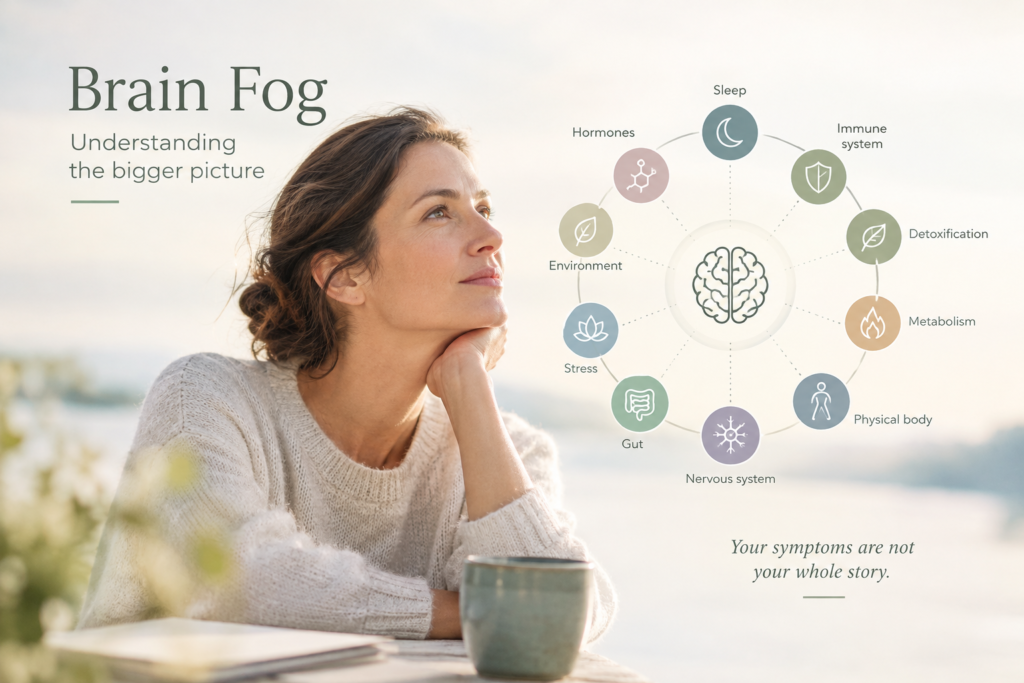
Your brain is connected to the rest of you — your gut, nervous system, hormones, immune system, detoxification, metabolism, sleep and physical body.
Understanding the bigger picture is the first step towards finding a way forward.
Why am I experiencing brain fog?
There isn’t one universal cause of brain fog.Your symptoms may be influenced by several factors at the same time.
Poor sleep
Sleep isn’t simply about the number of hours you spend in bed.The quality and consistency of your sleep matter too.
If you wake feeling unrefreshed, regularly wake during the night or depend heavily on caffeine to function, or sleep with your mouth open these patterns are worth exploring.
Brain glymphatic clearance is most active during deep sleep, chronically short or fragmented sleep is one of the reasons waste clearances in the brain falls short, and it clearly impairs focus and memory. I have covered the subject in a previous article
Impaired detoxification can contribute to toxins build-up which eventually affect cognition.
For example When the liver can’t clear ammonia and other compounds, they build up and affect the brain, causing brain fog, poor concentration, slowed thinking, and sleep disruption.
Gut-related factors: Gut inflammation or dysbiosis may influence brain function through , for example, inflammatory signalling.
Your digestive system and brain are in constant communication through the nervous, immune and metabolic systems. You can read more about the gut–brain axis here.
Digestion, gut microbiome balance and nutrient availability are areas to explore in the presence of cognitive symptoms.
Drop in the sex hormones levels: Estrogen, progesterone, and testosterone all act directly on brain tissue. Estrogen influences neurotransmitters like serotonin, dopamine, and acetylcholine, supports blood flow and energy metabolism in the brain, and is particularly active in regions tied to memory and word retrieval. Progesterone has calming effects through its metabolites acting on GABA receptors. Testosterone, in both men and women, influences motivation, mood, spatial thinking, and mental energy.
Brain fog, blood sugar and energy Your brain needs a consistent supply of energy to function properly. Some people notice that their mental clarity changes throughout the day.
Perhaps you feel relatively clear in the morning but experience an afternoon crash. Or maybe you feel sleepy and mentally foggy after certain meals.
Blood-sugar fluctuations is a possible factor associated with changes in energy and mental clarity.
Stress, the nervous system and brain fog
Have you ever noticed that your brain works perfectly well when you’re relaxed — but seems to shut down when you’re under pressure?
Stress can affect sleep, energy, concentration and how we experience pain.
And if your body has been under prolonged stress, you may begin to feel as though you are constantly running on empty.
Brain fog after COVID and other infections For some people, brain fog begins after an infection.
Long COVID, for example, can include fatigue and problems with memory and concentration.
In my clinical experience, cognitive deficits are among the main disabling symptoms in post COVID infection.
The hippocampus, a key region for cognition, has been shown to be particularly vulnerable to covid infection.
Why I combine Functional Medicine and Osteopathy?
This is at the heart of my approach in my clinic in Edinburgh.
Functional Medicine and Osteopathy look at different aspects of your health — and together they can create a more complete picture.
Functional Medicine asks:
What might be happening inside the body?
Depending on your individual circumstances, we may explore:
- Nutrition
- Digestion
- Sleep
- Stress
- Hormonal health
- Blood-sugar regulation
- Immune function
- Inflammation
- Lifestyle
- Relevant laboratory information
You might think of Osteopathy as something you visit an osteopath for when you have back pain, neck pain or an injury.
But osteopathy is based on understanding the relationships between different parts of the body and the body physiology
During a consultation I assess how your physical body is functioning and adapting
We may consider:
- Cranial and spinal mechanics
- Occlusion
- Myofascial tension
- Internal organs mobility
- Physical patterns associated with stress and pain
And look at how are these different systems are interacting in your individual health story and contributing or maintaining your symptoms.
How I approach brain fog at my Edinburgh clinic
When you come to see me, the first step is understanding your story.
I want to know:
- When did the brain fog begin?
- What was happening in your life at the time?
- Did it follow an illness, period of stress or hormonal change?
- How are you sleeping?
- How is your digestion and diet?
- What happens to your energy throughout the day?
- Do you experience pain or physical tension?
- What makes your symptoms better or worse?
These questions can reveal patterns that may otherwise be missed.
From there, your care is tailored to your individual needs.
This may involve a combination lifestyle and nutritional support, osteopathic treatment, kinesiology testing.
The aim is to remove the factors that are contributing to your symptoms, bring balance and self-healing capacity back into the body and re establish the equilibrium that the body has lost.
Your symptoms are not your whole story.
Sometimes they are clues.
And by putting those clues together, we can begin to understand what your body may be asking for.
If you are ready to take back control of your health and are committed to your healing, do get in touch to discover how I can help you.
If you are ready to take care of your health and are committed to your healing, do get in touch to discover how I can help you. book your consultation here
Feel free to tag your friend who might benefit from reading this article.
Connect with me on Facebook or Instagram where I share lots of useful information.
To your health,
Paola
Paola Pizzuto is a registered Osteopath and Certified Functional Medicine practitioner in Edinburgh with a commitment and dedication to helping people achieve better health.
 Receive for free the e-book I have specifically written for you, to help you learn more about the uniqueness and preciousness of your body and start a new journey of greater health and happiness. Your email is not shared with third parties and stored a GDPR compliant service provider (AWeber).
Leave a Reply